


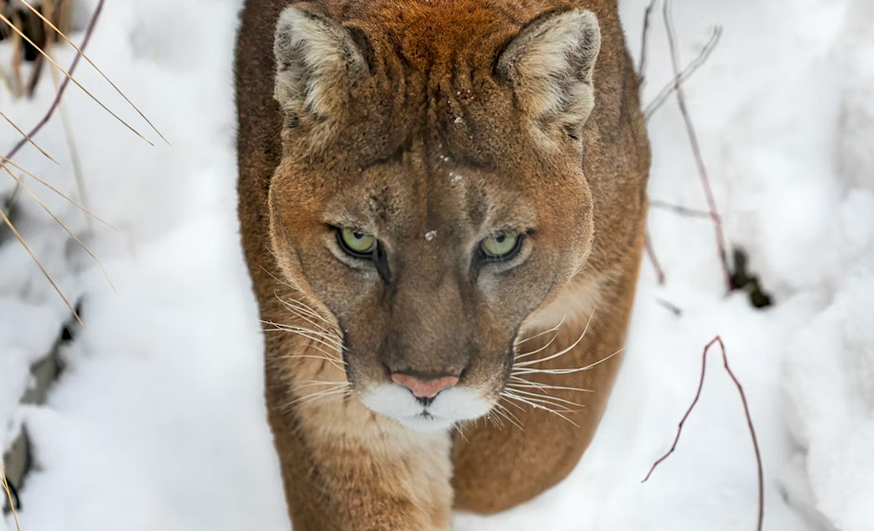
With the State population continuing to grow, wildlife managers note that the buffer zone between nature and suburbia is thinning, leading apex hunters to treat backyards not as barriers but as hunting grounds.
1. The Wood River Valley Crisis: Mountain Lions & Bears
In the northern part of the Wood River Valley—specifically Ketchum and Sun Valley—residents have reported multiple daylight sightings of mountain lions and black bears that appear entirely habituated to human activity.
- The "Brazen" Behavior: Regional wildlife officials have expressed concern about the frequency of these reports. Unlike typical wild animals that flee at the sight of humans, these predators remain stationary or even approach homes during the day.
- Residential Refuge: In Hailey and Bellevue, mountain lions have been found using the spaces under decks as "day beds." Officials warn that these cats are following resident deer and elk populations that have become permanent fixtures in these communities.
- Daylight Activity: While cougars are traditionally most active at dawn and dusk, 2026 sightings have occurred at all hours, often near schools and parks. In one recent instance in Hailey, officers had to euthanize a lion that refused to be hazed away from a neighborhood subdivision.
2. Treasure Valley Coyotes: The Top of the Food Chain?
In the more densely populated Boise and Meridian areas, coyotes have become significantly bolder. National wildlife observers note that in locations where hunting is restricted, coyotes are beginning to view themselves as the top of the local hierarchy.
- Pet Safety: There has been an uptick in "brazen" coyote attacks on small pets in fenced yards. Officials emphasize that hearing a human voice is no longer enough to keep these urbanized coyotes at bay; many now require aggressive physical hazing to retreat.
- The "Stare Down": Residents have reported coyotes standing their ground on sidewalks and trails, staring down walkers until they are physically chased away.
3. The "Insomniac" Black Bears of 2026
Unseasonably mild temperatures in early January 2026 have led to a phenomenon of "insomniac" bears. While most black bears should be in deep winter sleep, several have remained active, seeking out easy calories in residential areas.
-
Food Conditioning: Once a bear finds a "reward" like birdseed or pet food, they enter a cycle of habituation. IDFG warns that "a fed bear is a dead bear," as animals that lose their fear of humans often have to be euthanized for public safety.
4. Why Behavior is Shifting
Wildlife biologists attribute this shift in predator behavior to two main factors:
- Extreme Habituation: Predators raised on the edges of town learn that human noises (cars, talking, lawnmowers) do not equal a threat.
- Attractant Availability: Fermenting garbage, bird feeders, and uncleaned barbecue grills act as powerful beacons. A bear's sense of smell is estimated to be seven times stronger than a bloodhound's, allowing them to detect a single dirty grill from miles away.
5. Idaho "Active Defense" Protocols
To protect your home and pets, IDFG recommends these immediate actions:
- The "Hazing" Rule: If you see a predator, act immediately. Shout, clap, bang pots, or use an air horn. Please do not wait for the animal to leave on its own; you must make it clear that it is not welcome.
- Secure the Perimeter: Block access to crawl spaces and areas under decks. Ensure all barn and shed doors are securely latched.
- Pet Supervision: Never leave small pets outside unattended, especially during the early morning and late evening.
- Remove All Food: Bring in bird feeders at night and store trash in bear-resistant containers or inside a locked garage.
Conclusion: Vigilance in the Wild West
 Living in Idaho means sharing the landscape with powerful wildlife, a privilege that comes with significant responsibility. As we navigate the winter of 2026, the goal for residents is to "re-wild" these predators by ensuring they encounter resistance and scarce resources in our neighborhoods. By remaining vigilant and proactive, Idahoans can help preserve the natural boundaries that keep both humans and wildlife safe. Maintaining these boundaries is the only way to ensure that Idaho remains a place where both people and wild animals can thrive in their respective habitats.
