


 HAWAII - Hawaii offers a lifestyle that is the envy of the world: perfect weather, stunning beaches, and the "Aloha Spirit." But in 2026, the cost of admission to paradise has never been higher.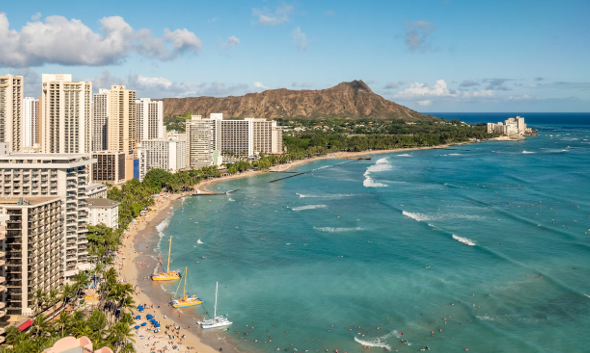
While the state has aggressively raised its minimum wage, the cost of housing and electricity has sprinted ahead. The "Middle Class" in Hawaii is arguably the most stressed in the nation, often requiring multiple jobs, multi-generational housing, or "side hustles" just to stay afloat in the middle of the Pacific.
The "On Paper" Middle Class: $64k to $191k
If you look at the raw census data, the barrier to enter the middle class seems high, but manageable.
- Statewide Range: $63,542 to $190,644.
- The Comparison: This floor is significantly higher than most U.S. states.
- The Reality: Earning $64,000 in Hawaii is statistically "middle class," but in practice, it is near-poverty. In Honolulu, this income level often forces residents into illegal sublets or overcrowded apartments, as it leaves almost zero margin for the state's sky-high utility bills.
The "Real" Cost of Comfort: The $294k Shocker
The most sobering data for 2026 is the "Comfort Index"—the income required to follow the 50/30/20 rule (Needs/Wants/Savings).
- Family of Four: To live comfortably—defined as owning a standard home, two cars, and saving for retirement—a family now needs an annual income of $294,362.
- Single Adult: A single person needs roughly $124,467 to maintain a secure lifestyle.
- The Ranking: This consistently ranks Hawaii as the #1 or #2 most expensive state in the union, often trading places with Massachusetts.
The "Island" Divide
Your dollar's value depends entirely on which island you call home.
1. Oahu (The Urban Core)
Honolulu is the economic engine, but it runs on expensive fuel.
- The Cost: The median home price hovers near $1.1 million.
- The Rent: A modest 2-bedroom apartment averages $2,650/month.
- The Lifestyle: While wages are highest here, traffic is brutal, and competition for housing is fierce against military personnel (who receive housing allowances) and foreign investors.
2. Maui & Kauai (The Tourist Premiums)
These islands have become playgrounds for the ultra-wealthy.
The Shift: In towns like Kihei (Maui) or Hanalei (Kauai), short-term rentals have decimated the long-term housing stock.
The Gap: Service workers are often priced out of the very towns they serve. On Kauai, the median home price has surged past $1.2 million, making it even more expensive than Oahu, despite having fewer high-paying corporate jobs.
3. The Big Island (The "Affordable" Option)
Hawaii Island remains the last refuge for affordability—but there’s a catch.
- The Bargain: You can still find homes for $600,000 to $800,000.
- The Trade-off: Jobs are scarcer and pay less. Additionally, many affordable areas rely on water catchment tanks and have limited medical infrastructure, adding "hidden costs" to the lower mortgage.
The "Hidden" Taxes: Electricity & Shipping
Living in the middle of the ocean comes with unique bills.
- Electricity: Hawaii residents pay the highest electricity rates in the nation (often 3x to 4x the national average). A central A/C bill can easily hit $600/month in the summer.
- The Jones Act: A century-old maritime law requires goods shipped between U.S. ports to be on U.S.-flagged ships. This limits competition and drives up the cost of everything from milk ($8/gallon) to furniture.
The Minimum Wage Climb
Hawaii is in the middle of a multi-year plan to raise wages.
- The Rate: As of January 1, 2026, the minimum wage rose to $16.00 per hour.
- The Goal: It is set to hit $18.00 by 2028.
- The Gap: Despite the hike, the "Housing Wage" (what you need to afford a 2-bedroom rental) is $41.83/hr. This means a minimum wage worker needs 2.6 full-time jobs just to pay rent.
 If you bring a remote salary of $200,000+ or have military housing support, the "Aloha Lifestyle" is attainable. But for the local workforce, the "Paradise Tax" is becoming an eviction notice. The trend of "Brain Drain"—where young families leave for Las Vegas (the "Ninth Island") or Texas—is accelerating, simply because the math of staying home no longer adds up.
