


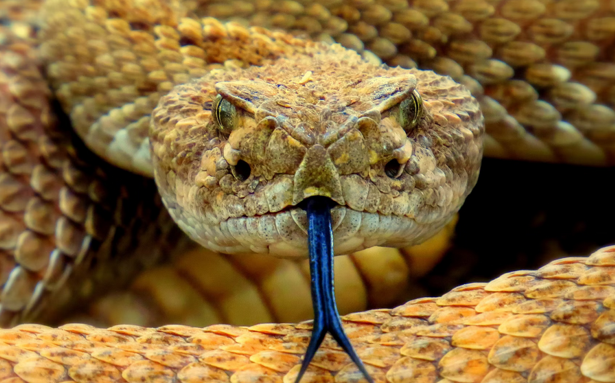
For hikers, dog walkers, and campers, the news is excellent: there is only one venomous species you need to worry about.
However, because this single species has two very different "looks" depending on which side of the Cascades you are on, confusion is common. Whether you are in Medford or Bend, here is the definitive guide to the Western Rattlesnake—Oregon’s only venomous resident—and the harmless copycat that just wants you to think it's tough.
1. The Western Rattlesnake (Crotalus oreganus)
- Danger Level: High (The only venomous threat in the state)
- Where they hide: Widespread but patchy. Found in the southwest interior valleys (Medford/Ashland), the Columbia River Gorge, and the entirety of Eastern Oregon. Note: They are effectively absent from the rainy Coast Range and the northern Willamette Valley (Portland/Salem).
While scientifically considered one species, Oregon hikers will encounter two distinct subspecies that look quite different:
A. The Northern Pacific Rattlesnake
- Region: Western & Central Oregon (The Gorge, Rogue Valley, Oak woodlands).
- Appearance: Darker body color (dark grey, olive, or brown) with dark blotches. They blend perfectly into the shadows of oak scrub and basalt cliffs.
- ID Tip: A heavy body, a broad triangular head, and a rattle at the end of the tail.
B. The Great Basin Rattlesnake
- Region: Eastern Oregon (The High Desert, Owyhee Canyonlands, Alvord Desert).
- Appearance: Much lighter and paler. They are often dusty tan or light grey to match the sagebrush and sand, with slightly faded blotches.
- ID Tip: Look for them sunning on lava rocks or crossing desert roads at dusk.
The Imposter: The Gopher Snake
Myth: "I saw a rattlesnake, but the rattle fell off!" Fact: You almost certainly saw a Gopher Snake (also known as a Bull Snake).
This is the most common case of mistaken identity in Oregon. Gopher snakes are large, harmless, and very dramatic. When frightened, they hiss loudly (sounding like a rattle), flatten their heads into a triangle shape, and vibrate their tails against dry grass.
-
How to tell the difference:
- The Tail: Rattlesnakes have a blocky rattle. Gopher snakes have a pointed tail that tapers to a sharp tip.
- The Eyes: Rattlesnakes have vertical "cat" pupils. Gopher snakes have round pupils.
What Isn't Here
Don't let internet rumors ruin your hike.
- No Copperheads: They don't live in the Pacific Northwest.
- No Cottonmouths: You will not find Water Moccasins in the Willamette River.
- No Diamondbacks: These giants live in the Southwest, not Oregon.
Safety & First Aid
Oregon hospitals in snake country are well-equipped to treat bites.
The "Do Not" List:
- NO Tourniquets.
- NO Cutting and sucking (The "cowboy cure" destroys tissue).
- NO Ice packs.
The "To Do" List:
- Call 911.
- Stay Calm. A racing heart pumps venom faster.
- Remove Constriction. Rings, watches, and tight boots must come off immediately before swelling starts.
- Keep the limb neutral.
A Note for Dog Owners: Rattlesnake bites are a significant threat to dogs in the Columbia Gorge and Central Oregon. Keep your dog on a leash and on the trail. If your dog is bitten, carry them (if possible) to the car and head to the nearest emergency vet immediately.
Video: ODFW - Living with Snakes in Oregon The Oregon Department of Fish & Wildlife explains how to coexist with our native reptiles.
