

 OREGON STATE - Long before the Oregon Trail and the establishment of the 33rd state, the Pacific Northwest was one of the most culturally and linguistically dense regions in North America. Because "Oregon" is a name with debated origins (possibly French, Spanish, or indigenous), there was no single word for the entire state. Instead, the land was a tapestry of homelands defined by the Pacific Coast, the Columbia River, and the high deserts of the east.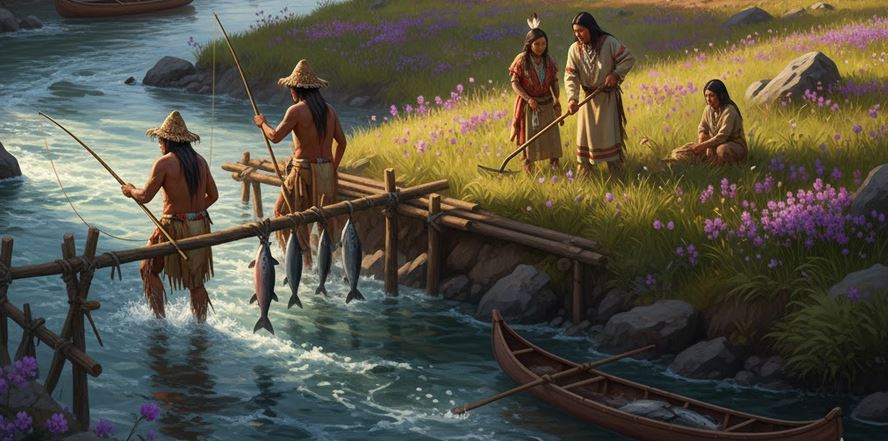
The Columbia River: "The Big River"
The Columbia River was the lifeblood of the region, serving as a massive trade highway and the world's most productive salmon fishery. To the nations that lived along its banks—including the Chinook, Wasco, and Wishram—the river was the land.
- Nch’i-Wána: The Sahaptin-speaking people (like the Yakama and Umatilla) called the Columbia Nch’i-Wána, which translates literally to "The Big River." * Wimahl: The Upper Chinook name for the river, meaning "The Great River."
- Multnomah: Derived from the Chinookan word máɬnumax̣, meaning "Downriver" or "Towards the Water." It originally referred to the people living on what we now call Sauvie Island.
The Coast and the Willamette Valley: "The People of the Grass"
Western Oregon, with its lush valleys and rugged coastline, was the domain of the Kalapuya, Tillamook, and Coos people.
- Kalapuya: The original inhabitants of the Willamette Valley. While their name for the valley itself was localized to specific prairies, the name Willamette is believed to be a Clackamas Chinook word, Wallamt, meaning "To Spill Water," likely referring to the Willamette Falls.
- Tillamook: A Salishan term meaning "People of the Nehalem" or "People of the South."
- Coos: A name derived from the Hanis and Miluk word K’uusa, meaning "South" or "Southward."
The High Desert and the Cascades: "The Lake People"
In the arid eastern and southern parts of the state, the Modoc, Klamath, and Northern Paiute defined the landscape.
- Eukshikni: The Klamath people called themselves the Eukshikni, meaning "People of the Lake," referring to Upper Klamath Lake.
- Wadatika: A Northern Paiute group whose name means "Wada-Seed Eaters," describing the importance of the seepweed plant in their high-desert diet.
- Mazama: While the mountain (Crater Lake) is named for a climbing club, the Klamath name for the site is Giiwas, which means "A Spiritual Place." They witnessed the eruption of Mount Mazama 7,700 years ago, and their oral histories still describe the "falling of the mountain."
Living Etymology: Oregon’s Indigenous Map
Oregon’s map is a linguistic archive of the nations that managed its forests and rivers for over 10,000 years:
- Tualatin: Derived from the Kalapuya word Atfalati, meaning "A Place of Slow-Moving Water" or "Sluggish River."
- Clackamas: Named for the Clackamas people; the name is believed to mean "Those Along the River."
- Umpqua: A name shared by the river and the people, believed to mean "Thundering Water" or "Across the Water."
- Siskiyou: While the origin is debated, some believe it is a Cree word for "Bob-Tailed Horse" brought into the region by fur traders, while others suggest an indigenous root meaning "Continuous Mountain Ridge."
- Netarts: A Tillamook word meaning "Near the Water."
 Oregon’s indigenous legacy is defined by Abundance and Adaptation. From the "Big River" traders to the "Lake People" of the desert, the names left behind reflect a landscape where the environment dictated every aspect of culture—from the salmon runs of the spring to the wada-seed harvests of the summer.
