


State wildlife officials have noted an increase in territorial boldness, with apex predators being documented at residential campsites and on hiking trails at unprecedented frequencies. Here are the five most dangerous animals calling New Mexico home this year.
1. The Mountain Lion (Cougar)
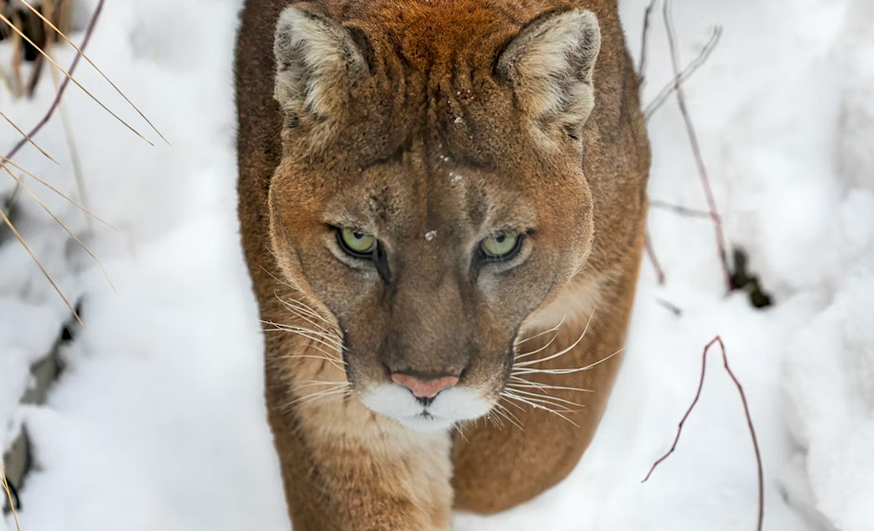
New Mexico is home to an estimated 3,500 adult mountain lions, and in early 2026, they are proving to be more visible than ever. In a recent high-profile encounter, a "brazen" mountain lion was filmed strolling through a crowded campsite at Cimarron Canyon State Park, highlighting how comfortable these cats are becoming in human-occupied spaces.
- The 2026 Alert: With deer and elk moving to lower elevations to find forage, mountain lions are following them directly into the foothills of the Sandia and Sangre de Cristo Mountains. Doorbell cameras in the Santa Fe area have already captured several lions investigating porches this month.
- The Danger: As 150-pound ambush predators, they pose a primary threat through their stealth. They are most active at dawn and dusk, often tracking prey from rocky outcroppings above trails.
- Safety Tip: Never hike alone. If you see a lion, do not run. Stand your ground, pick up small children, and act like a predator yourself—shout, wave your arms, and throw whatever is at hand.
2. The American Black Bear
While they are the only bear species in New Mexico, their population is thriving, particularly in the northern and western forests. In 2026, state biologists warn of a surge in human-bear conflicts along the "wildlife-urban" fringes.
- The Food Drive: A relatively mild winter has kept some bears in a state of "walking hibernation," where they wake up to seek high-calorie snacks. Bears in the Ruidoso and Cloudcroft areas have become increasingly bold about entering garages and tearing through vehicle windows to reach food scraps.
- The Danger: A "food-conditioned" bear loses its natural fear of humans and can become highly aggressive if its path to a meal is blocked.
- Safety Tip: "Bear-proof" your property by securing trash in reinforced containers and removing bird feeders. If you encounter a bear, talk calmly and back away slowly; if it attacks, fight back with everything you have.
3. The "Neurotoxic" Duo: Western Diamondback and Mojave Green Rattlesnakes
New Mexico is home to eight species of rattlesnakes, but the Western Diamondback and the Mojave Green are the most formidable threats to hikers in 2026.
- The "Mojave Green" Factor: Found primarily in the southwestern corner of the state near Lordsburg and Las Cruces, the Mojave Green is widely considered the most dangerous snake in the U.S. Its venom contains a potent neurotoxin that can cause respiratory failure, making it far more lethal than the hemotoxic venom of other vipers.
- Early Emergence: Unseasonably warm spikes in early 2026 have led to reports of snakes basking on sun-exposed rocks in the high desert much earlier than usual.
- Safety Tip: Always wear sturdy boots and avoid reaching into rocky crevices. Suppose you hear a rattle, freeze. Locate the snake, then back away. Remember: a rattlesnake can strike a distance up to half its body length.
4. The Arizona Bark Scorpion
While many scorpions call the New Mexico desert home, the Arizona Bark Scorpion is the only one in the state with medically significant venom. It is increasingly being found in residential homes in the Southwestern corridor.
- The Vertical Hunter: Unlike other scorpions that stay on the ground, Bark Scorpions are expert climbers. In 2026, residents are reporting them in "brazen" locations—hanging from ceilings, inside shoes, and perched on walls inside homes.
- The Danger: Their sting causes intense pain, numbness, and, for minor children or older people, potentially life-threatening systemic reactions.
- Safety Tip: Use a UV blacklight to sweep your home and yard at night, as these scorpions glow a bright neon blue. Always shake out your shoes and bedding before use.
5. The Gila Monster
The Gila Monster is a "brazen" relic of the prehistoric Southwest and the only venomous lizard native to the United States. While rare, they are a significant concern for desert hikers in the southwestern counties of New Mexico.
- The "Bulldog" Bite: Gila Monsters do not have fangs like a snake. Instead, they have powerful jaws and grooved teeth; they latch on and chew, flowing venom into the wound through capillary action.
- The Danger: While a bite is rarely fatal to a healthy adult, the pain is described as excruciating and long-lasting. Their grip is notoriously difficult to break once they have latched on.
- Safety Tip: Gila Monsters are protected by state law. If you see one, give it a wide berth and admire it from a distance. They are slow-moving and generally non-aggressive unless they are cornered or handled.
Respecting the Land of Enchantment
New Mexico's 2026 landscape is a reminder that our beautiful surroundings are shared with powerful, wild residents. The "brazen" behavior seen in state parks and residential fringes is a sign that we must stay alert and "wildlife-wise." By securing our homes and staying vigilant on the trails, we can ensure that these remarkable animals remain a respected part of our ecosystem rather than a backyard tragedy.
