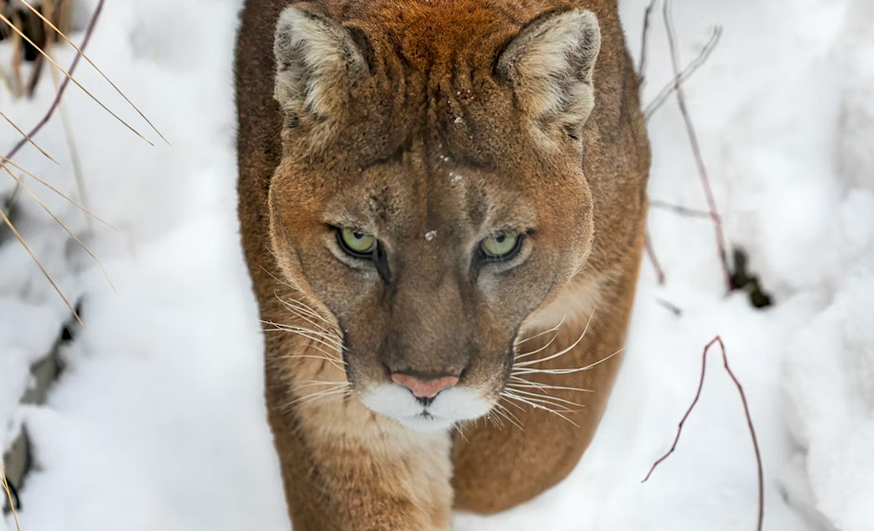
With urban sprawl continuing to push into the edges of the desert and mountains, the line between "wild" and "suburban" has blurred, leading apex hunters to treat backyards as their primary hunting grounds.
1. The Mountain Lion: Shadow in the Foothills
The most concerning reports involve mountain lions (cougars) in the master-planned communities of Summerlin in Las Vegas and the Washoe Valley in Reno/Sparks. Traditionally, these cats are "ghosts" that avoid human contact, but 2026 has seen a shift in behavior.
- Daylight Sightings: Multiple residents in the western foothills of the Las Vegas Valley have captured footage of cougars lounging on patio furniture or patrolling backyard walls during the day.
- Lack of Fear: NDOW biologists note that these "brazen" cats are no longer fleeing when residents shout or bang pots from their doorways.
- The "Brazen" Incident: In late December 2025, a mountain lion in Henderson was reported to have snatched a pet from a porch while the owner was standing only a few feet away—a level of boldness rarely seen in the species.
2. Urban Coyotes: The "New Neighbors."
While coyotes have always been part of the Nevada landscape, the 2026 "urban coyote" has become a sophisticated scavenger that has lost its natural wariness of humans.
- Group Boldness: Residents in North Las Vegas and Reno report coyotes moving in small packs through suburban streets during school commute hours.
- The "Stare Down": Unlike wild coyotes that scatter, these urbanized predators have been known to "stare down" humans, waiting for them to move so they can continue foraging for pet food or fallen fruit.
- Safety Alert: Officials warn that coyotes are becoming increasingly adept at jumping 6-foot cinderblock walls, making typical backyard fences less effective than they were a decade ago.
3. The "Insomniac" Tahoe Bears
In the Lake Tahoe Basin, a mild start to the 2026 winter has resulted in several "problem" black bears failing to enter hibernation. These bears have become heavily food-conditioned.
- Structural Damage: "Brazen" bears in Incline Village have been reported using their massive strength to peel back garage doors or break through "bear-proof" enclosures that weren't properly latched.
- Inside the Home: In one notable incident, a bear entered a residence through an unlocked sliding door while the occupants were in the next room, heading straight for the kitchen pantry.
4. Why Is This Happening?
NDOW experts point to three primary drivers for this "brazen" behavior:
- Extreme Habituation: Animals that grow up in suburban edges learn that humans are "noisy but harmless."
- Resource Scarcity: Despite a mild winter, long-term water shortages in the desert often drive prey (such as deer and rabbits) into green, irrigated neighborhoods. The predators naturally follow their food source.
- The "Easy Meal" Cycle: A single unwashed barbecue grill or a bowl of outdoor cat food can train a predator to return to a specific house daily.
5. Nevada "Active Defense" Protocols
To protect your family and pets from these increasingly bold visitors, NDOW recommends the following:
- The "9 PM Routine": Ensure all pet doors are locked, trash is secured in a garage, and no food is left outside.
- Heightened Supervision: In areas near the foothills, pets should be supervised even in fenced yards. High-set walls in Las Vegas provide a "catwalk" for cougars to observe backyards from above.
- Aggressive Hazing: If you encounter a predator, do not be passive. Use air horns, high-intensity whistles, or "coyote rollers" on fences. The goal is to make the animal feel unwelcome and "re-wild" its fear of humans.
- Remove "Ambush Cover": Clear out thick desert scrub or tall ornamental grasses near entryways where cougars or coyotes could hide.
A Shared Landscape
 Living in the Silver State means sharing the land with some of North America's most capable hunters. As we move further into 2026, we must ensure that our bacs do not become "training grounds" for bold predators. By removing attractants and maintaining a firm boundary between our homes and the wilderness, we can coexist with Nevada's wildlife while keeping our neighborhoods safe. Vigilance and proper "hazing" are the most effective tools we have to ensure these predators remain wild and our families remain secure.