

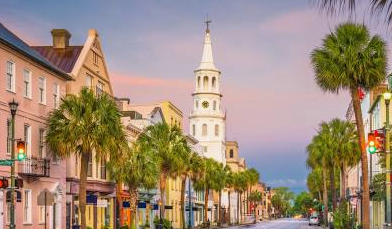
For visitors looking to trace the city's complex and profound past, the sites below offer unparalleled access to over 350 years of American history.
The Civil War and Military History
The area surrounding Charleston Harbor is defined by its role as the spark of the Civil War and its centuries of military defense.
- Fort Sumter: This site, located on an island at the entrance to Charleston Harbor, is perhaps the most significant single location, as it is where the American Civil War started on April 12, 1861. Visitors must take a boat to reach the fort. Exhibits detailing the events leading up to the conflict are available at the Fort Sumter Visitor Education Center at Liberty Square (free admission).
- Fort Moultrie National Historical Park: This National Park Service site explains and preserves the evolution of seacoast defense in America, from the American Revolution—where the fort secured one of the first decisive Patriot victories—through World War II.
Preserved Antebellum Homes and Plantations
Charleston is famous for its expertly preserved residences and plantation sites, offering complex and often difficult glimpses into the lives of both wealthy families and enslaved people whose labor supported them.
- Aiken-Rhett House: Considered the city's most intact antebellum residence (c. 1820). It is preserved "as-found," with historic interiors remaining virtually unaltered since 1858, providing a rare, unvarnished look at the past.
- Nathaniel Russell House: A National Historic Landmark (c. 1808) featuring a beautifully restored interior, period collection items, and an iconic three-story free-flying staircase. Active archaeology is often conducted in the former enslaved spaces.
- McLeod Plantation Historic Site: This site is preserved to honor the generations of enslaved people and the Gullah/Geechee heritage. It is presented not as a romanticized estate, but as an essential cultural and historical site.
- Magnolia Plantation & Gardens / Middleton Place / Drayton Hall: These plantation sites, located just outside the city, are renowned for their beauty and history. Middleton Place is home to America's oldest and most important landscaped gardens, while Drayton Hall (c. 1738) is America's oldest unrestored plantation.
Colonial and Civic History Downtown
The historic core of Charleston offers many sites detailing the city's role as a colonial hub and a center of Revolutionary dissent.
- Old Exchange and Provost Dungeon: Built in 1771, this is one of the three most historically significant buildings of colonial America. It served as a British customs house and a place where American Patriots were held prisoner during the War of Independence.
- The Powder Magazine: The oldest public building in the Carolinas, constructed initially to store gunpowder for the city's defense.
- Heyward-Washington House: Known as Charleston's Revolutionary War house, this was the townhome of Thomas Heyward, Jr., a signer of the Declaration of Independence.
- The Historic Dock Street Theatre: Cited as "America's First Theatre," this beautifully restored venue continues to host central performances, including the Spoleto Festival USA and the Moja Arts Festival.
African American Heritage and Archives
To fully understand Charleston's history, several sites preserve the records and legacies of African-American and Gullah/Geechee culture.
- Avery Research Center for African-American History and Culture: Housed in a beautifully restored facility that was the former Avery School (built in 1865), this center preserves vital archives, exhibits, and historical records.
- McLeod Plantation Historic Site: As mentioned above, the site is dedicated to the Gullah/Geechee culture and the history of the enslaved people.
In Charleston, every corner, house, and harbor view offers a window into the past, ensuring that visitors can engage with the many layers of its significant history.
