


 MARYLAND - They stand knee-deep in the salt marsh, mist rising off the water, or graze nonchalantly on the dunes while beachgoers snap photos from afar. The wild horses of Assateague Island are one of the most surreal sights on the East Coast—a touch of the untamed sitting right next to a family beach vacation.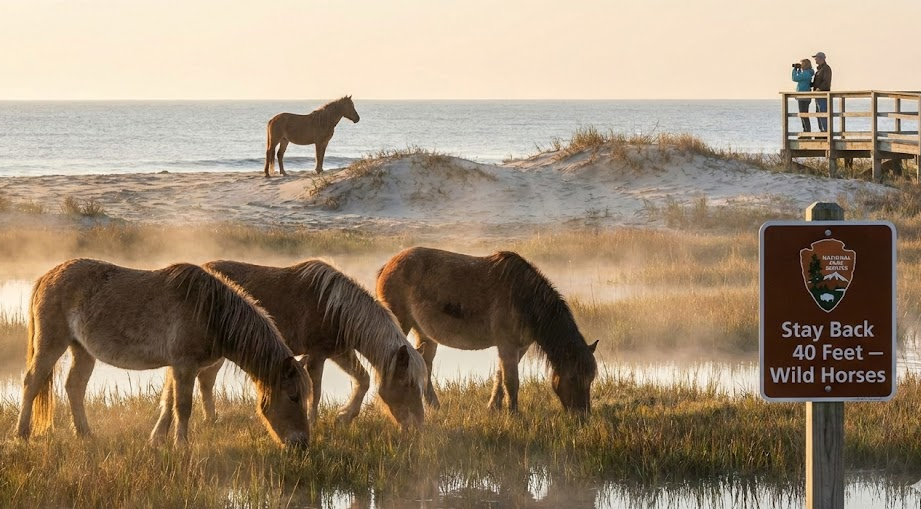
 But seeing them isn't as simple as driving up and petting a pony. In fact, doing that could cost you a hefty fine or a trip to the emergency room. Whether you are planning a day trip from Philadelphia or a weekend getaway, here is the essential guide to finding, watching, and respecting the wild horses of Maryland.
How Did They Get Here? (Shipwrecks vs. Settlers)
If you ask a local romantic, they will tell you the legend: Centuries ago, a Spanish galleon was torn apart by a violent storm off the coast. The cargo—shipments of horses bound for the New World—swam for their lives, washing ashore on the barrier island where they have thrived ever since.
If you ask a historian, you might get a more practical answer: In the 17th century, mainland farmers likely brought their livestock to the island to avoid fencing laws and taxation.
Interestingly, science might be on the side of the romantics. Recent DNA studies have found links between the Assateague ponies and Spanish breeds, suggesting the shipwreck legend could be more than just a bedtime story.
A Tale of Two Herds: Maryland vs. Virginia
It is important to know that the horses on Assateague Island are actually split into two distinct populations by a fence at the state line.
- The Maryland Herd: These horses roam freely over the 27 miles of the National Seashore. They are managed by the National Park Service (NPS) and are treated as 100% wild wildlife. They receive no food or veterinary care and are not auctioned off. To keep the population sustainable (around 80-100 horses), mares are darted with a non-hormonal contraceptive.
- The Virginia Herd: These are the famous "Chincoteague Ponies" owned by the Chincoteague Volunteer Fire Company. They live in fenced areas on the Virginia side and receive some vet care. These are the ponies that participate in the world-famous "Pony Swim" and auction every July.
Pro Tip: If you want the "safari" experience where horses might cross the road in front of your car or appear on the beach next to you, go to the Maryland side (the National Seashore entrance near Ocean City).
The "Bus Length" Rule (And Why It Matters)
This is the most critical part of your visit. You must stay at least 40 feet (approx. one school bus length) away from the horses at all times.
This isn't just a suggestion; it is the law. Rangers issue citations with fines starting at $100 for visitors who get too close.
Why so strict?
- They Bite and Kick: These are not petting zoo animals. They are feral beasts that fight for dominance. Every year, tourists are bitten or kicked because they turned their backs on a horse for a selfie.
- The "Fed Horse is a Dead Horse": When horses get used to humans feeding them (even just an apple), they start hanging out near roads. This leads to horses being struck and killed by cars.
Best Spots to Spot Them
You don't need a tour guide to see the horses if you know where to look.
- The Verrazano Bridge Causeway: Keep your eyes peeled as you drive over the bridge into the park; they often graze in the marshes on either side.
- North Ocean Beach Parking Lot: It sounds counterintuitive, but the horses love the pavement. They often loiter in the parking lots to escape the biting flies in the marsh.
- The Life of the Marsh Trail: This boardwalk trail offers a safe, elevated vantage point to see horses wading in the water.
- The "OSV" Zone: If you have a 4WD vehicle and an Over-Sand Vehicle permit, driving down the beach away from the crowds is often the best way to see large bands of horses undisturbed.
Plan Your Visit
- Best Time of Day: Early morning (before 9 AM) or late afternoon. The horses are most active when it's cooler. Mid-day heat usually sends them into the thickets or under the bridge for shade.
- Entrance Fee: A 7-day vehicle pass for Assateague Island National Seashore is $25.
- Bug Warning: If you visit in July or August, bring heavy-duty bug spray. The same flies that annoy the horses will happily bite you, too.
Next Steps for You:
- Check the Tide Charts: If you plan to look for horses in the marsh, low tide is often better for spotting them wading.
- Download the NPS App: The National Park Service app has great offline maps of Assateague, so you don't get lost if cell service drops.
- Pack a Zoom Lens: Since you have to stay 40 feet back, your phone camera might not cut it. A basic zoom camera or binoculars will make the trip much better.
