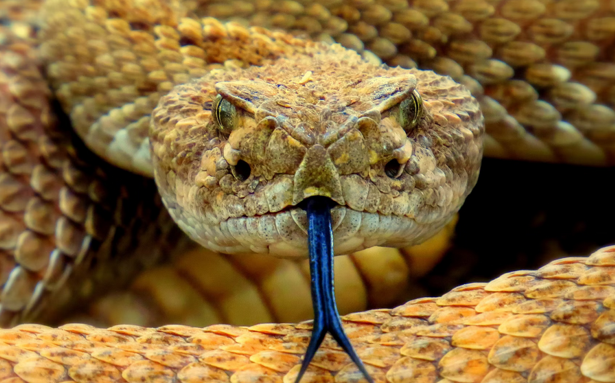
However, misinformation about snakes in the Old Line State is rampant. Many residents swear they have seen "Water Moccasins" in the Chesapeake Bay or local creeks, but wildlife experts tell a different story. Before you head out for your next adventure in Western Maryland or a walk near the Potomac, here is the definitive guide to the only two venomous snakes you need to watch out for—and the one you think you see, but don't.
1. The Copperhead (Agkistrodon contortrix)
- Danger Level: Moderate (Responsible for the vast majority of venomous bites in MD)
- Where they hide: Statewide. They favor rocky, wooded areas in the Piedmont and Western Maryland but are also found on the Coastal Plain.
The Copperhead is the most common venomous snake in Maryland. They are famously well-camouflaged, looking exactly like a pile of dead oak leaves. Unlike many snakes that slither away when they hear you coming, Copperheads tend to freeze in place, relying on their camouflage to keep them safe. This is why bites often happen when a hiker or gardener accidentally steps on one.
-
ID Tip: Look for the "Hershey’s Kiss" pattern—dark brown hourglass or saddlebag shapes on a tan or copper-colored body.
2. The Timber Rattlesnake (Crotalus horridus)
- Danger Level: Very High
- Where they hide: Western Maryland only. Primarily found in Frederick, Washington, Allegany, and Garrett counties.
This is the heavy hitter of the Maryland mountains. Timber Rattlesnakes are generally shy and reclusive, preferring the solitude of rocky ridges and dense forests (like those found in Cunningham Falls or Green Ridge State Forest).
- Two "Phases": In Maryland, these snakes come in two color variations. The "Yellow Phase" has a yellow/brown body with dark chevrons, while the "Black Phase" is almost entirely dark with a black head.
- ID Tip: A heavy body, a chevron (V-shaped) pattern on the back, and a distinct rattle at the end of a black tail.
The Myth: The Cottonmouth / Water Moccasin
Let’s settle the debate once and for all: There are no Cottonmouths in Maryland.
According to the Maryland Department of Natural Resources, the range of the Cottonmouth (Water Moccasin) stops in southern Virginia, near the Great Dismal Swamp.
-
What you are seeing: If you see a thick, dark snake swimming in the Patapsco River or the Chesapeake Bay, it is almost certainly a Northern Watersnake. These harmless snakes are aggressive when cornered and will flatten their heads to look like vipers, but they possess no venom.
Safety & Legal Warning
In Maryland, snakes are considered non-game wildlife and are protected by law. It is illegal to kill them.
What to do if bitten:
- Call 911 immediately.
- Stay Calm. A racing heart spreads venom faster.
- Remove Constriction. Take off rings, watches, and tight boots immediately, as swelling will be rapid.
- Do NOT use a tourniquet, cut the wound, or try to suck out the venom.
Most bites occur when people try to kill or handle a snake. The safest way to view Maryland's wildlife is from a distance.
Maryland DNR Video: Venomous Snake Identification This video by local wildlife experts helps you distinguish between the harmless Northern Watersnake and the venomous Copperhead.