
 CALIFORNIA - Long before the Spanish missions, the Gold Rush, or Hollywood, the land that became California was home to the most linguistically and culturally diverse Indigenous population in North America. Scholars estimate that between 300,000 and 700,000 Native people lived in California in 1769, speaking over 100 distinct languages and dialects, representing approximately 70 different tribal groups.
The Original Nations of California: A Land of Unparalleled Indigenous Diversity
This incredible diversity was shaped by California's varied geography, from the Pacific Coast and lush valleys to vast deserts and towering mountains, each offering unique resources and fostering distinct ways of life.
Key Characteristics of California's Native Peoples
Several defining features set California Native cultures apart:
- Linguistic Diversity: California was a global hotspot for language families, with numerous unrelated languages spoken in close proximity.
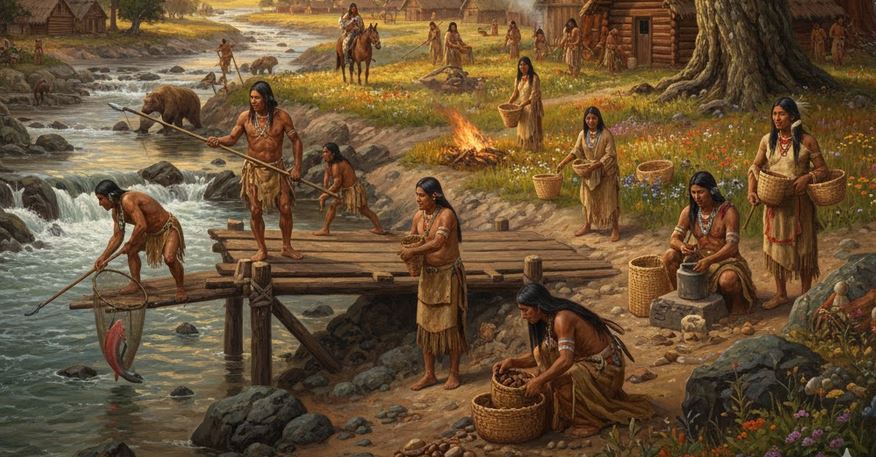
- Acorn Culture: The acorn was a staple food for many groups across the state. Elaborate processes of harvesting, leaching (to remove tannins), and grinding acorns into flour were central to their diet and cultural practices.
- Subsistence: Most California Native groups were hunter-gatherers, utilizing the abundant natural resources of their local environments. While agriculture was less common than in other parts of North America, sophisticated land management practices, including controlled burns, were widespread.
- Political Organization: Most groups were organized into independent, smaller villages or bands, rather than large, centralized tribes or confederacies, reflecting the abundant local resources that reduced the need for extensive territorial expansion.
Major Cultural Regions and Representative Nations
The Indigenous peoples of California are often grouped into broad cultural regions based on shared environments and subsistence strategies.
1. Northwestern California (Redwood Coast & Rivers)
- Environment: Dense redwood forests, rugged coastline, mighty salmon rivers.
- Prominent Nations: Yurok, Karuk, Hupa, Tolowa, Wiyot.
- Culture: Known for their elaborate salmon fishing techniques, the use of cedar plankhouses, and a rich ceremonial life centered on wealth display and world renewal, including the White Deerskin Dance.
2. Central California (Central Valley, Sierra Foothills, Bay Area)
- Environment: Fertile valleys, oak woodlands, marshlands, and foothills.
- Prominent Nations: Miwok, Yokuts, Maidu, Pomo, Wintun, Ohlone (Costanoan).
- Culture: Strong acorn economies, sophisticated basket weaving (especially the Pomo, known for their intricate feather baskets), and diverse hunting and gathering strategies. The Ohlone people thrived around the San Francisco Bay.
3. Southern California (Coastal, Valleys, Mountains)
- Environment: Arid coastlines, chaparral, mountains, desert fringes.
- Prominent Nations: Chumash, Tongva (Gabrielino), Luiseño, Kumeyaay (Diegueño), Cahuilla, Serrano.
- Culture: The Chumash were master mariners, famous for their advanced plank canoes (tomols) and extensive trade networks along the coast. Many Southern California tribes developed complex spiritual and ceremonial practices, often involving sophisticated celestial observations.
4. Northeastern California (Great Basin & Plateau Influences)
- Environment: High desert, volcanic plateaus, mountains (shared characteristics with the Great Basin and Plateau cultures).
- Prominent Nations: Modoc, Achomawi (Pit River Tribe), Atsugewi, Paiute (Northern Paiute bands).
- Culture: Adapted to harsh desert conditions, relying on hunting small game, fishing in lakes and rivers, and gathering seeds and roots. The Modoc were known for their fierce resistance during the Modoc War of 1872-1873.
The Enduring Legacy and Modern Sovereignty
The arrival of Europeans brought devastation to California's Native peoples, beginning with the Spanish Mission system, followed by the Mexican period, and culminating in the catastrophic California Gold Rush, which saw government-sanctioned massacres and genocide. The Native population plummeted from hundreds of thousands to just around 30,000 by 1870.
 Despite this horrific history, California's Indigenous Nations have shown immense resilience. Today, California has the largest Native American population of any U.S. state, with over 100 federally recognized tribes and numerous state-recognized or unrecognized groups fighting for their sovereignty and cultural revitalization. These modern nations are vibrant, actively preserving their languages, traditions, and lands, and contributing significantly to California's cultural fabric.
