 DENMARK - If you walk up to any pølsevogn (hot dog wagon) in Denmark, you aren't just going to be handed a plain sausage on a bun. The Danish hot dog is an architectural marvel of flavors and textures, engineered to hit every craving at once: salty, sweet, tangy, and crunchy.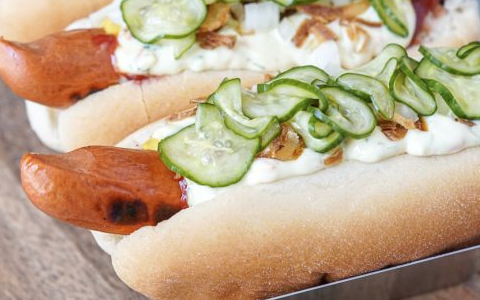
While modern stands offer endless variations, understanding the classic styles will help you order like a true local. Here is a breakdown of the iconic hot dogs that define Danish street food.
The Classic: Ristet Hotdog
If you ask for a hot dog with "everything" (med det hele), this is what you get. The ristet (roasted) hot dog is the undisputed king of the Danish street food scene.
The foundation is a standard, slightly sweet bun and a grilled pork sausage. But the magic lies entirely in the toppings, which are layered in a very specific order:
- Ketchup and Mustard: A base layer of sweet apple ketchup and a dab of sharp brown mustard.
- Remoulade: This is Denmark's secret weapon. It's a sweet, tangy, mayonnaise-based condiment mixed with finely chopped pickles, capers, and herbs.
- Raw Onions: Finely diced for a sharp, fresh bite.
- Crispy Onions: Generously showered over the top to provide the necessary crunch.
- Pickles: Thinly sliced, sweet-and-sour cucumber discs (agurkesalat) crown the entire creation.
The Icon: Rød Pølse (The Red Sausage)
Visually, this is the most famous Danish street food. The rød pølse is a standard pork sausage that has been dyed a vibrant, almost neon red. The tradition dates back to the 1920s, when butchers would dye day-old sausages red to sell them at a discount. Today, the dye is purely nostalgic, and the sausages are fresh, high-quality, and lightly boiled rather than grilled.
You can get a red sausage served inside a traditional ristet dog, but traditionalists often order it "naked." The vendor serves the bright red sausage on a small paper plate, next to a plain bun, with a side of ketchup and mustard for dipping.
The Commuter's Choice: Fransk Dog
When you're rushing to catch a train at Nørreport Station and don't want to risk spilling remoulade on your shirt, you order a Fransk dog (French dog).
Despite the name, this is a uniquely Scandinavian invention. It consists of a hollowed-out, crusty baguette section. The vendor squirts a generous amount of "French dog dressing"—a creamy, tangy, mayo-based herb sauce—into the hole, then slides the heated sausage right in. It's entirely self-contained, completely spill-proof, and dangerously easy to eat with one hand.
The Modern Wave: Gourmet and Organic
Over the last decade, a new wave of carts has elevated the humble pølsevogn tradition.
Stands like DØP (Den Økologiske Pølsemand) have swapped traditional pork for organic beef, chicken, or vegetarian tofu sausages, serving them on sourdough or root-vegetable buns. Gourmet spots replace the standard condiments with wild garlic mayo, truffle mustard, or pickled red onions, proving that the Danish hot dog is a versatile canvas for high-end culinary experimentation.
The Unwritten Rule: No matter which style you choose, tradition dictates that you must wash it down with a glass bottle of Cocio—Denmark's beloved, rich chocolate milk. The sweet creaminess perfectly cuts through the salt and vinegar of the hot dog.