

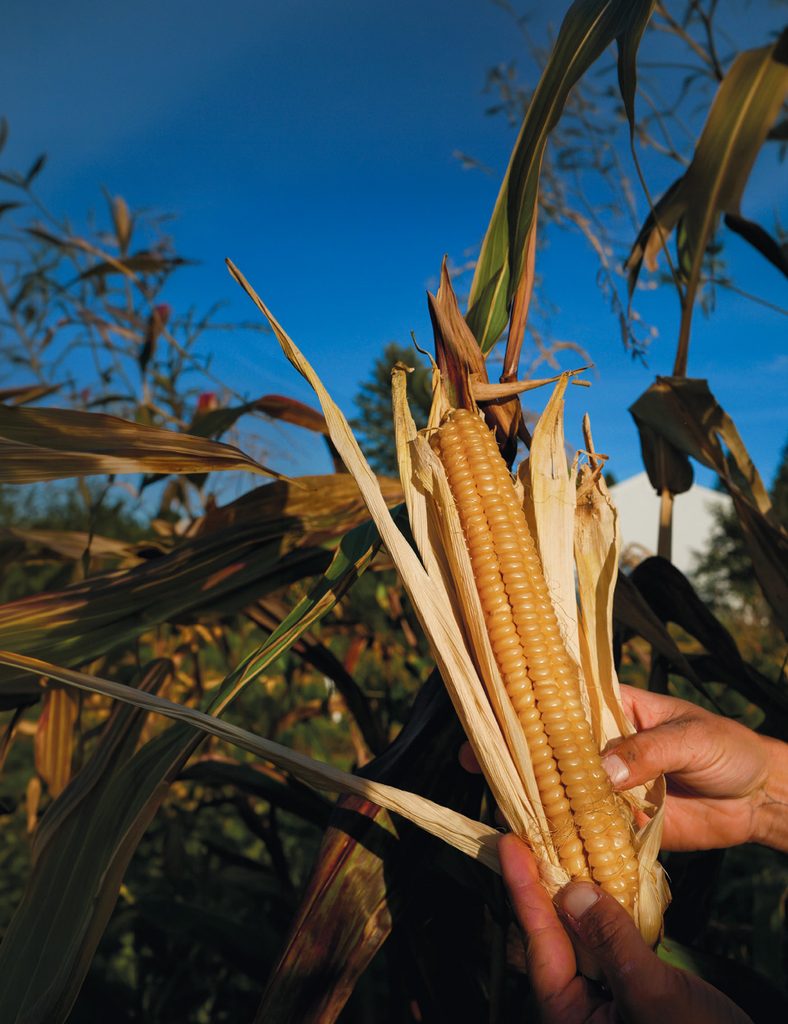
One can be forgiven for not knowing the meaning behind State of Rhode Island statutes 21-25-1 and the other four laws that follow. Laws elucidating the specific definition of native corn, its labeling and penalties for mislabeling are not exactly common, but leave it to Rhode Island to use laws to safeguard the terroir of our lovingly protected strain of native flint corn.
Most corn in the U.S. is grown in an industrial fashion using patented seed stock where farmers are not allowed to keep seeds (or kernels) for replanting. The plants have been genetically modified to withstand regular applications of herbicides (usually glyphosate, or Roundup), and to produce large starchy kernels. This “field corn”—representing over 90% of all corn grown in the U.S.—is rarely consumed directly by humans. Instead, it is reserved for livestock feed, ethanol production and sweeteners. As these plants grow they release pollen, which blows in the wind and can cross-pollinate with other corn plants, thereby putting at risk the genetic integrity of downwind crops.
Remarkably, Rhode Island’s state-recognized corn has endured thanks to generations of protective growers and careful seed saving that preserves a connection to the soil and local environment, giving the flint corn a distinctive connection to our region. Rooted in the traditions that have kept these seeds from disappearing, it’s a kind of Rhode Island corn terroir.
Read Full Article at Edible Rhody - A Kernel of Rhode Island History