 PENNSYLVANIA - If you’ve ever sat in bumper-to-bumper traffic on Route 30, Route 219, or Route 11, you’ve probably spent your time cursing the stoplights or checking your GPS. But what if I told you that you aren’t just driving on asphalt—you’re following a "ghost road" carved into the earth ten centuries ago?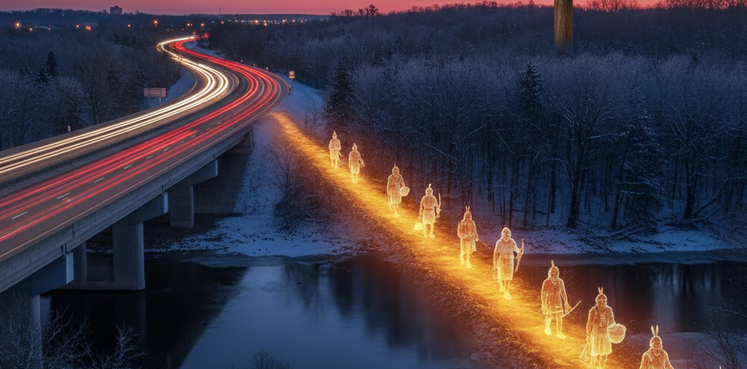
Long before the first orange traffic cone was placed in Pennsylvania, the state was crisscrossed by a sophisticated network of "highways" that would put our modern engineering to shame. Here is the mind-blowing truth about the roads you drive every day.
The "Great Minquas Path": The Original Route 30
The next time you’re driving the Lincoln Highway (Route 30) between Lancaster and Philadelphia, you’re retracing the exact steps of the Susquehannock and Lenape nations.
Known as the Great Minquas Path, this wasn't just a small trail through the woods. It was a major commercial artery used to transport thousands of beaver pelts and trade goods between the Susquehanna River and the Delaware River. Modern surveyors didn't "invent" these routes; they simply paved over the paths that indigenous people had already optimized for the easiest grades and the most direct river crossings.
The Seneca Trail: The North-South Connection
If your travels take you toward Western PA or down through the mountains on Route 219, you are riding the Seneca Trail (also known as the Great Indian Warpath).
This trail was the "I-95 of the 1700s," connecting the Haudenosaunee (Iroquois) in the north to the Cherokee and Catawba nations in the south. These travelers didn't have Google Maps, but they had something better: an intimate knowledge of the Pennsylvania ridgelines. They designed the path to stay on high ground to avoid the thick, swampy brush of the valleys—a strategy modern highway engineers still use to prevent flooding and road erosion today.
Why the Paths Still Work 1,000 Years Later
It’s no coincidence that our modern towns sit exactly where they do.
- The Intersection Rule: Cities like Harrisburg and Reading exist because they were the junctions of major indigenous trails.
- The River Crossings: Every bridge you cross on the Susquehanna or the Schuylkill likely sits at a "ford" (a shallow crossing point) discovered and utilized by Native Americans for millennia.
The "Ghost" in the Asphalt
The next time you see a sign for the "Blue Mountain" or "Kittatinny," remember that you aren't just looking at a name on a map. You are driving through a living history book. These roads were engineered by the footfalls of millions of people long before Pennsylvania had a name.
 We think we built this state from scratch, but the truth is, we’re just following the directions left behind by the people who truly knew this land.