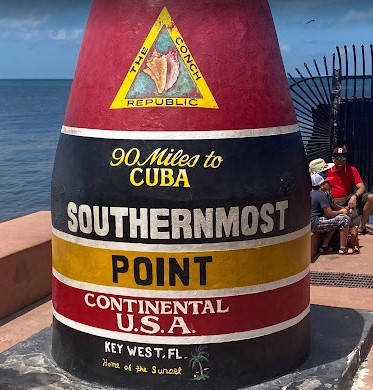
Taking a selfie at America's Southernmost Point is an absolute must-do when visiting Key West, Florida. But this iconic, brightly painted marker is far more than just a photo op—it is a monument surrounded by deep layers of island history.
The Story Behind the Buoy
While the intersection of South and Whitehead Streets has long been recognized as the Southernmost Point, it wasn't always marked by the massive concrete structure you see today. Originally, a simple wooden sign marked the spot. However, visitors constantly stole the sign as a souvenir.
In 1983, to solve the theft problem permanently, the City of Key West erected the current marker. Believe it or not, the "buoy" is actually a huge, heavy concrete sewer junction that road workers unearthed during road construction. Rather than moving the heavy structure, the city painted it in seaworthy stripes of black, red, and yellow. Standing an impressive 12 feet tall and 7 feet wide, this anchored concrete monument has survived numerous hurricanes and endless lines of tourists.
"90 Miles to Cuba"
The buoy famously declares that you are just "90 Miles to Cuba." While technically, the closest point of Cuba is about 94 statute miles away, the rounded number has become an iconic symbol of Key West's deep connection to the island nation.
Near the buoy, a somber plaque serves as a reminder of the perilous journey across the Florida Straits, honoring the Cuban rafters who tragically drowned attempting to reach America.
Hidden History at Land's End
When you stand in line for your photo, take a moment to look around the corner and appreciate the deeper history of this intersection:
- The 1917 Cable Hut: Just to the left of the buoy sits a tiny, unassuming concrete structure. This hut once housed an underwater telegraph and telephone cable that directly connected Key West to Havana in the early 20th century.
- A Legacy of Segregation and Community: During World War II, the military fenced off most of the government-owned beaches. This small patch of waterfront became the only beach access for the island's Black community, known as "Black Beach." Here, Bahama Village fishermen anchored their boats and sold fresh catches and conch shells from low tables.
- The Bishop Albert Kee Statue: Just steps from the buoy is a bronze statue honoring Bishop Albert Kee, erected in 2015. For decades, Kee and his father acted as the unofficial ambassadors of Key West, greeting millions of tourists at the point with a cheerful wave and a blast from a blown conch shell.
Pro Tip: To avoid waiting 30 to 45 minutes in the sweltering Florida heat to snap your selfie, try to visit the Southernmost Point before 8:00 AM. You will beat the cruise ship crowds and enjoy a peaceful, unobstructed view of the Atlantic Ocean.
