

 MINNESOTA - The name "Minnesota" is an English adaptation of the Dakota phrase Mni Sota Makoce. While often translated simply as "Sky-tinted Water," the name more accurately describes the way the region’s thousands of lakes reflect the shifting patterns of the clouds: Mni (water), Sota (clear but cloudy/sky-tinted), and Makoce (land).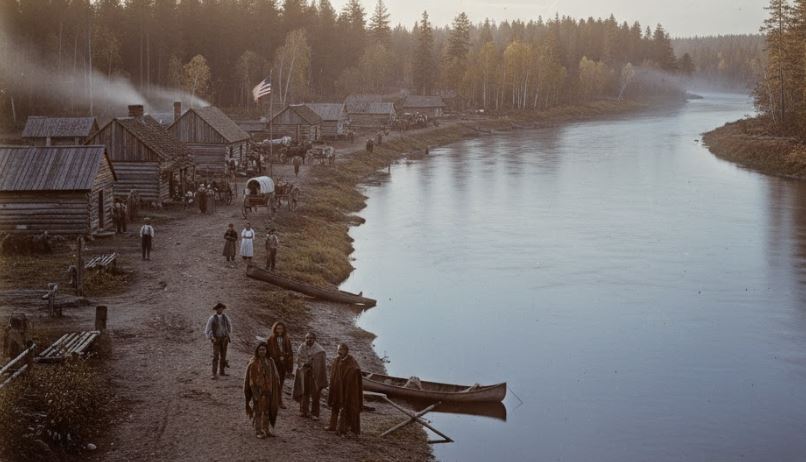
Long before the current state borders were established, this region was a vibrant landscape inhabited primarily by the Dakota and the Anishinaabe (Ojibwe/Chippewa). For these nations, the land was a network of sacred waterways, wild rice beds, and ancient forests.
The People of the Lakes and Woods
Minnesota’s geography transitions from the southern prairies to the deep pine forests of the north. This variety supported two distinct but often overlapping cultural worlds:
- The Dakota (Oyate): The Dakota are the original inhabitants of southern and central Minnesota. They view the confluence of the Minnesota and Mississippi rivers as Bdote, the sacred center of the earth and the site of their creation.
- The Anishinaabe (Ojibwe): Moving into the northern forests and Lake Superior regions, the Anishinaabe established a lifestyle centered around the seasonal harvest of Manoomin (wild rice) and the use of birchbark canoes to navigate the labyrinth of northern lakes.
Regional and Cultural Designations
Indigenous groups identified the landscape through its physical character and the gifts it provided:
- Gichigami: This is the Anishinaabe name for Lake Superior, meaning "Great Sea" or "Huge Water." It remains a central pillar of Anishinaabe spiritual and physical life.
- The Mississippi River: Known to the Anishinaabe as Misi-ziibi (Great River) and to the Dakota as Hahawakpa (River of the Falls), this waterway served as the primary north-south artery for trade and travel.
- The Pipestone Quarries: Located in southwestern Minnesota, this area is a sacred site for many Plains tribes. The soft red stone (Inyan Sa) is used to carve sacred pipes, and the quarries have historically been treated as neutral ground among warring nations.
Significant Indigenous Place Names
The linguistic legacy of the Dakota and Anishinaabe is embedded in nearly every corner of the state. Minneapolis is a linguistic hybrid, combining the Dakota Mni (water) with the Greek polis (city). The city’s famous Bde Maka Ska (White Earth Lake) recently had its original Dakota name restored, replacing the colonial name Lake Calhoun.
The city of Bemidji is named after the Anishinaabe Chief Binay-zhee, and the name itself refers to a lake with a river flowing through it. Mankato is a slight misspelling of the Dakota word Mahkato, meaning "Blue Earth." Even the St. Croix River was known to the Ojibwe as Gichi-ziibi, while the Twin Cities area is recognized by the Dakota as the site of Oheyawahi (a sacred hill for viewing burials and the landscape).
A Living Sovereign Presence
Today, Minnesota is home to eleven federally recognized tribes: seven Anishinaabe (Ojibwe) bands and four Dakota communities. These nations are leaders in environmental protection—particularly in the preservation of wild rice habitats—and continue to revitalize their languages through immersion schools and community programs.
By recognizing the origin of Mni Sota Makoce, we acknowledge that Minnesota’s identity is not just about the "10,000 lakes," but about a sacred relationship with the water and the sky that has been maintained by the Dakota and Anishinaabe for countless generations.
