 OREGON - The land now known as Oregon is the ancestral home of dozens of distinct Indigenous Nations who have lived there since time immemorial. Their cultures were shaped by the state's dramatic geography, spanning the fertile valleys of the west, the rugged Pacific Coast, the high desert of the east, and the powerful Columbia River Plateau.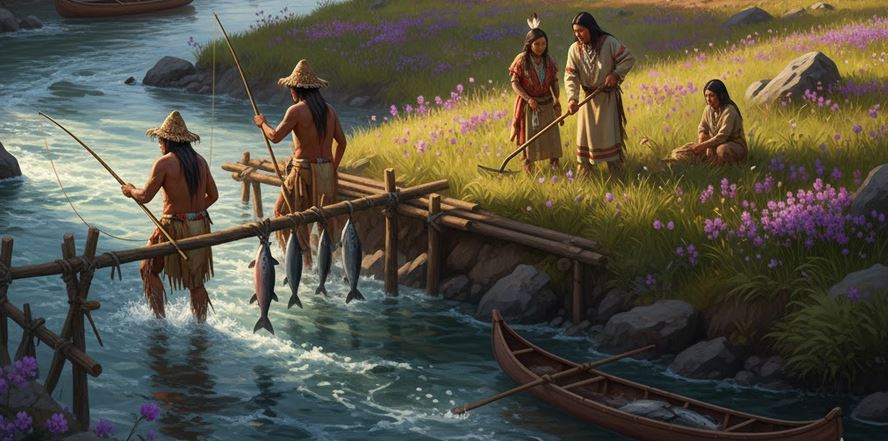
The Original Nations of Oregon: Peoples of the Rivers, Coast, and Desert
Oregon's Native history is notable for the sheer diversity of languages and cultures, the devastating impacts of disease and the Oregon Trail, and the subsequent federal policies of Termination and Restoration.
The Major Cultural Regions and Nations
Oregon's Indigenous Nations are often categorized into four distinct cultural areas, each reflecting a unique way of life centered on available resources.
1. The Northwest Coast
These nations thrived on the abundant resources of the Pacific Ocean and coastal estuaries, relying on salmon, shellfish, sea mammals, and cedar for their subsistence and material culture (including the construction of large plankhouses).
-
Prominent Nations: Tillamook, Clatsop, Coos, Coquille, Siuslaw, and various Athapaskan-speaking groups in the south (like the Tututni).
-
Modern Legacy: Descendants of many of these nations form the Confederated Tribes of Coos, Lower Umpqua, and Siuslaw Indians, and the Confederated Tribes of Siletz Indians (which includes 27 bands from Northern California to Southern Washington).
2. The Willamette and Umpqua Valleys
The nations of Western Oregon's interior valleys relied heavily on agriculture, utilizing controlled burns to cultivate fields of camas and other root crops.
-
Prominent Nations: The various bands of Kalapuya (including the Chelamela, Chemapho, and Chafin) and the Molalla.
-
Historical Impact: These groups suffered catastrophic population loss due to diseases introduced in the 1830s and were later displaced by the massive influx of settlers arriving on the Oregon Trail after the Oregon Donation Land Act of 1850.
-
Modern Legacy: Many are now part of the Confederated Tribes of Grand Ronde Community of Oregon (a confederation of over 30 tribes and bands from the area) and the Cow Creek Band of Umpqua Tribe of Indians.
3. The Columbia River Plateau
These nations were known for their sophisticated trade networks and their reliance on the great salmon runs of the Columbia River, especially at Celilo Falls (submerged in 1957 by the Dalles Dam). They were also skilled horsemen and buffalo hunters.
-
Prominent Nations: Cayuse, Umatilla, Walla Walla, and the Warm Springs (including the Wasco and Warm Springs bands).
-
Modern Legacy: These tribes united to form the Confederated Tribes of the Umatilla Indian Reservation and the Confederated Tribes of Warm Springs Reservation of Oregon (composed of the Warm Springs, Wasco, and Paiute tribes).
4. The Great Basin (Eastern Oregon)
The people of the dry, high-desert country were migratory hunter-gatherers, traveling in small groups to harvest seasonal resources like seeds, roots, and game.
-
Prominent Nations: The various bands of Northern Paiute (like the Wadatika), and the Klamath and Modoc peoples of the southern lakes and plateau.
-
Modern Legacy: These groups are represented by the Burns Paiute Tribe and the Klamath Tribes (Klamath, Modoc, and Yahooskin-Paiute Peoples).
The Legacy of Sovereignty and Restoration
Oregon's history with Native Americans includes a unique period of federal policy known as Termination (1950s-1960s), which unilaterally ended the government-to-government relationship with several tribes and stripped them of their lands.
-
Restoration: Due to tireless work by tribal leaders and activists, several Oregon tribes were among the first in the nation to have their federal recognition restored, beginning with the Confederated Tribes of Siletz Indians in 1977.
 Today, there are nine federally recognized tribal governments in Oregon, which function as sovereign nations that actively manage their economies, natural resources, and cultural preservation efforts:
 Today, there are nine federally recognized tribal governments in Oregon, which function as sovereign nations that actively manage their economies, natural resources, and cultural preservation efforts:
- Burns Paiute Tribe
- Confederated Tribes of Coos, Lower Umpqua, and Siuslaw Indians
- Confederated Tribes of Grand Ronde Community of Oregon
- Confederated Tribes of Siletz Indians
- Confederated Tribes of the Umatilla Indian Reservation
- Confederated Tribes of Warm Springs
- Coquille Indian Tribe
- Cow Creek Band of Umpqua Tribe of Indians
- The Klamath Tribes