 PENNSYLVANIA - When we talk about "history" in the Keystone State, our minds usually drift to the brick-and-mortar icons of Philadelphia. But if you want to experience history you can actually taste, you have to head about 70 miles west to the heart of Pennsylvania Dutch Country.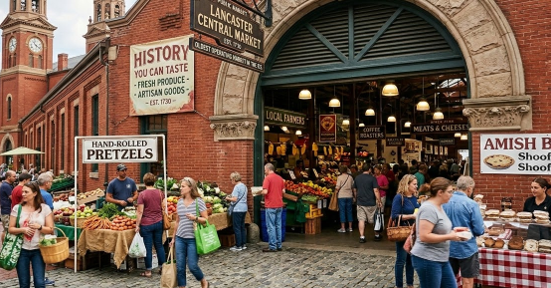
While many landmarks are preserved behind velvet ropes, Lancaster Central Market is a living, breathing piece of the American story that still smells like fresh shoofly pie and roasted coffee.
The Oldest Market: Lancaster Central Market (1730)
History isn't just about old buildings; it's about traditions that never stopped. The Lancaster Central Market was officially established in 1730 on land designated by William Hamilton.
To put that date in perspective: when the first farmers pulled their wagons into this square to trade their wares, George Washington was only two years old.
It holds the distinction of being the oldest continuously operating public farmers market in the United States.
A Tradition That Predates the Revolution
Walking through the market today, you are participating in a tradition that predates the Declaration of Independence by nearly 50 years. While empires have risen and fallen, and the world has gone digital, the simple act of a local farmer handing a basket of produce to a neighbor has remained unchanged at this spot for nearly three centuries.
Why It’s Still the Heart of Lancaster
The current Romanesque Revival building—with its iconic red brick and twin towers—was built in 1889, but the spirit of the market dates back to those original open-air stalls. Today, it serves more than just a tourist destination; it is the city's functional pantry.
- The Standholders: Many of the stalls have been operated by the same families for generations, passing down secret recipes for scrapple, summer sausage, and hand-rolled pretzels.
- The Architecture: Look up upon entering. The massive timber roof and sprawling floor plan were designed to accommodate the heavy foot traffic of a growing 19th-century city.
- The Global Flavors: While it’s the place to find authentic Pennsylvania Dutch staples, the 2026 version of the market also reflects Lancaster’s status as a "refugee capital," featuring stands with flavors from around the world alongside the traditional chicken pot pie.
Living History in Every Aisle
 In an era of supermarket delivery and automated checkouts, Lancaster Central Market is a reminder of the power of community. It’s a place where you don't just buy food; you engage in a social ritual that has defined Pennsylvania life since the colonial era.
If these walls—and the cobblestones beneath them—could talk, they’d tell the story of a town that grew into a city, a colony that grew into a nation, and a market that stayed true to its roots through it all.