 FLORDIA - When tracing the history of the Sunshine State, the timeline leads to the northeast coast and the city of St. Augustine. Established in 1565, it is the oldest continuously occupied European settlement in the continental United States, predating Jamestown (1607) and Plymouth Rock (1620) by decades.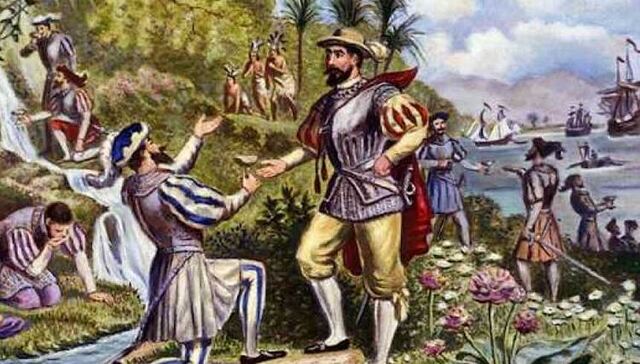
The Founding: September 8, 1565
St. Augustine's origins are Spanish, born from a desire to protect the Atlantic treasure fleet and remove French interlopers.
- Pedro Menéndez de Avilés: On September 8, 1565, the Spanish admiral Don Pedro Menéndez de Avilés came ashore with 800 colonists, soldiers, and priests. He named the settlement San Agustín because he had sighted the Florida coast on the feast day of Saint Augustine (August 28).
- The First Mass: Upon landing, Father Francisco López de Mendoza Grajales held a Mass, followed by a communal meal shared between the Spanish and the native Timucua people. This event is often cited by historians as the true "First Thanksgiving" in North America, occurring 56 years before the Pilgrims sat down in Massachusetts.
Indigenous Roots
Long before the Spanish galleons appeared on the horizon, the region was the domain of the Timucua people. Menéndez landed at the Timucua village of Seloy, presided over by Chief Saturiwa. The "Fountain of Youth" archaeological park in modern St. Augustine is the actual site of this original village and the initial Spanish encampment. The Timucua were a sophisticated society with large, circular council houses. Still, disease and conflict with European powers (Spanish, French, and English) eventually led to their tragic extinction as a distinct people by the 18th century.
A Technical Distinction: The Pensacola Rivalry
While St. Augustine is the oldest continuous city, it was not the first attempt at settlement in Florida. That honor belongs to Pensacola.
- The Tristan de Luna Expedition (1559): Six years before St. Augustine was founded, Tristan de Luna established a Spanish colony at Pensacola Bay with over 1,500 people.
- The Hurricane: Just weeks after landing, a massive hurricane destroyed the fleet and supplies. The colony struggled against famine and conflict for two years before being completely abandoned in 1561. Because of this abandonment, Pensacola is known as "America's First Settlement Attempt," but St. Augustine remains the oldest permanent city.
Settlement vs. Incorporation
St. Augustine served as the military and administrative capital of Florida for more than 250 years, under two periods of Spanish rule and one period of British rule.
-
U.S. Incorporation: When Florida became a U.S. territory in 1821, the legal structure changed. St. Augustine and Pensacola (which had been permanently resettled in 1698) were the only two major cities. The Legislative Council incorporated both cities in 1822, making them the oldest incorporated municipalities in the state.
 St. Augustine is the oldest city in Florida and the nation, founded on September 8, 1565, by Pedro Menéndez de Avilés. It was built upon the Timucua village of Seloy. While Pensacola claims the distinction of being the first settlement attempt (1559), it failed due to a hurricane. St. Augustine survived pirate raids, sieges, andimperiale changes to maintain continuous habitation for more than 460 years.
Sources
- National Park Service. "Castillo de San Marcos: History & Culture."
- City of St. Augustine. "Our History."
- Florida Department of State. "Spanish Colonial History."
- University of West Florida. "The Luna Expedition."
- Florida Museum of Natural History. "The Timucua."