 WASHINGTON STATE - While the name "Washington" was established in 1853 to honor the first U.S. President, the land itself has been known by many names for over 10,000 years. Because the state is geographically divided by the Cascade Mountains, it is home to a vast array of distinct cultures and languages, meaning there was never one single Native American name for the entire region.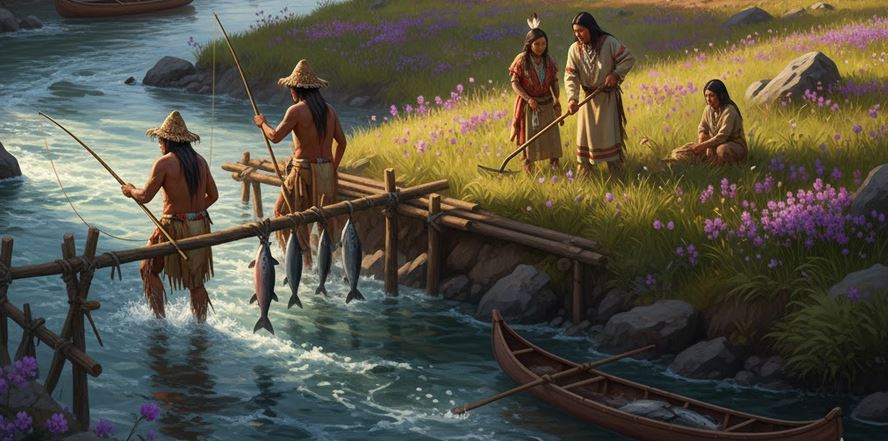
Instead, the identity of the land is found in the names given by the Coast Salish peoples of the west and the Interior Salish, Sahaptin, and Chinookan peoples of the east and south.
Diverse Sovereign Territories
The borders of modern Washington encompass the traditional territories of 29 federally recognized tribes. To the west, the landscape is defined by the Salish Sea and the lush rainforests, while the eastern plateau is characterized by vast shrub-steppe and the great Columbia River basin.
Regional and Cultural Designations
Indigenous groups used descriptive terminology to define their relationship with the environment rather than fixed political borders:
- The Salish Sea: This is the ancestral name for the intricate network of coastal waterways, including the Puget Sound. For the Coast Salish, the water was not a barrier but a highway that connected their villages.
- Whulge: In the Lushootseed language, this term translates to "The Salt Water." It was the primary name for the Puget Sound region, used by groups like the Duwamish, Suquamish, and Tulalip to describe the life-giving estuary.
- The Plateau: Eastern Washington is part of the Great Columbia Plateau. Tribes like the Spokane (Sp'q'n'iʔ), which means "Children of the Sun," and the Yakama, defined their world by the seasonal flow of the rivers and the migration of the salmon.
- The Chinook: Along the Lower Columbia River, the Chinookan people acted as the region's great traders, using a language that became the foundation for a trade jargon used across the entire Pacific Northwest.
Significant Indigenous Place Names
The linguistic heritage of Washington is embedded in its most famous landmarks. For example, the massive peak known as Mount Rainier is traditionally called təqʷuʔməʔ (pronounced Tahoma or Tacoma) by the Puyallup and other Lushootseed speakers, meaning "The Mountain" or "Mother of Waters." Similarly, the iconic Mount St. Helens is known as Loowit (or Louwala-Clough) to the Klickitat and Cowlitz peoples, which translates to "Smoking Mountain."
The city of Seattle itself is an Anglicized version of si'ahl, the name of the revered leader of the Duwamish and Suquamish tribes. In the eastern part of the state, the name Spokane comes from the Interior Salish word Sp'q'n'iʔ, reflecting the tribe's identity as "Children of the Sun." Even the Yakima Valley draws its name from the Yakama Nation, whose name has various interpretations including "Pregnant Ones" or "People of the Narrow River."
A Living Legacy
For the Indigenous nations of Washington, these names are not just historical artifacts; they are part of a living connection to the land. Today, many tribal communities are working to restore traditional names to maps and signage to ensure that the original "Mother of Waters" and the "Salt Water" are recognized by future generations.
By understanding these names, we acknowledge a history that is much deeper than the state's 19th-century boundaries—a history written in the languages of the people who have always been here.