 OREGON - Long before the first wagons rolled down the Oregon Trail, the Pacific Northwest was one of the most prosperous and socially complex regions in North America. Because of the incredible abundance of the Columbia River and the Pacific Coast, Oregon supported a population that didn't need traditional "farming" to thrive; the land and water provided everything they needed.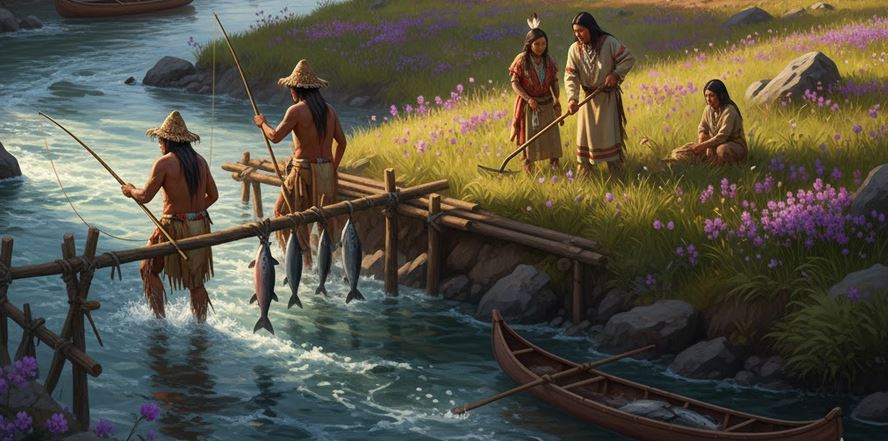
Estimating the population of pre-contact Oregon involves looking at the unique "Salmon Cultures" that defined the region for thousands of years.
A Region of River and Coast
Oregon’s pre-colonial population was concentrated in three main areas: the Pacific Coast, the Willamette Valley, and the Columbia River Plateau.
Unlike other parts of North America, these groups—including the Chinook, Nez Perce, Klamath, Modoc, and Tillamook—lived in permanent or semi-permanent villages. The sheer amount of food available allowed them to build large cedar plank houses and develop intricate social hierarchies and art.
The Population Estimates
Historians and archaeologists estimate that before the "Colonial Conquest" (specifically before the arrival of maritime fur traders in the late 1700s), the population of what is now Oregon was likely between 50,000 and 100,000 people.
-
The Columbia River Basin: This was the "Main Street" of the Northwest. The area around The Dalles was perhaps the greatest trading hub in North America. Some estimates suggest that the Columbia River area alone supported tens of thousands of people.
- The Willamette Valley: Home to the Kalapuya people, this fertile valley was managed through controlled burning to encourage the growth of camas bulbs, supporting a population of roughly 10,000 to 15,000.
- The Coastal Regions: The abundance of shellfish, whales, and ocean fish supported high-density villages along the entire Oregon coastline.
Why Was the Population So Stable?
Oregon was home to a "Gift Economy." The natural wealth was so immense that tribes could accumulate significant surplus:
- The Salmon Runs: The annual return of millions of salmon provided a high-protein food source that was dried, smoked, and traded as far east as the Great Plains.
- Camas and Wappato: These root vegetables provided the essential carbohydrates for the diet, meticulously harvested by women in the valleys.
- Trade Networks: The Chinook people developed a specialized trade language (Chinook Jargon) that allowed different tribes to communicate and trade everything from dentalium shells (money) to dried fish and furs.
The Impact of Early Contact
The tragedy of the Oregon population is that it was devastated by European diseases long before the mass migration of American settlers in the 1840s.
 Smallpox, malaria, and "intermittent fever" arrived via maritime fur trading ships in the 1770s and 1780s. By the time the first pioneers arrived on the Oregon Trail, they found a landscape that was essentially a "widowed land." In the Willamette Valley alone, it is estimated that 80% to 90% of the Indigenous population had perished from disease before the first permanent American settlements were even built.