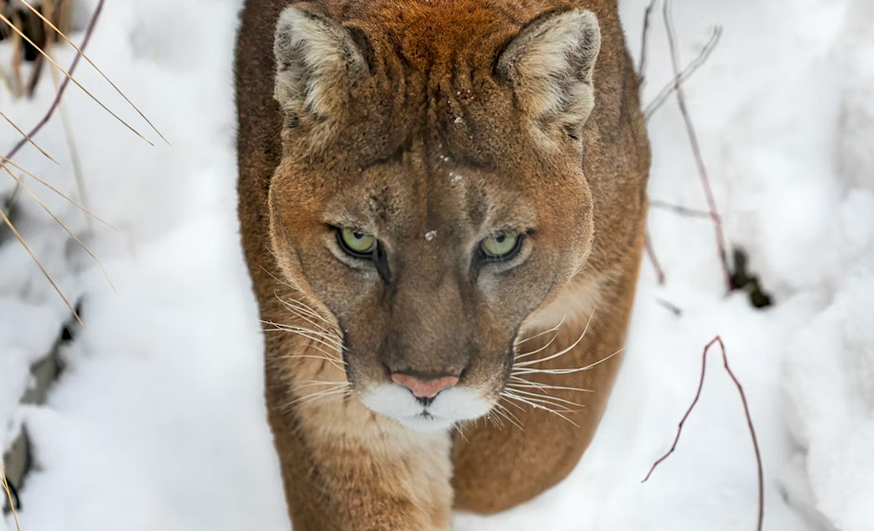
 Following a highly publicized sighting of a mountain lion in a busy South Reno parking lot late last year, the Nevada Department of Wildlife (NDOW) is reminding residents that the "Silver State" is home to some of the most specialized and dangerous creatures in North America. Here are the five you need to watch for in 2026.
1. The Mountain Lion (Cougar)
While usually solitary and elusive, Nevada's mountain lions are becoming a common sight on residential security cameras. In early 2026, sightings have surged in the South Reno and Washoe Valley areas, where the cats are following mule deer herds into lower elevations to avoid heavy mountain snow.
- The "Brazen" Shift: NDOW recently addressed concerns after a mountain lion was filmed calmly traversing a significant shopping center parking lot in Reno. Experts note that as these cats become habituated to urban noise, they are increasingly likely to view suburban parks and backyards as hunting grounds.
- The Danger: As 150-pound ambush predators, they are capable of taking down prey much larger than themselves. Their stealth makes them a particular threat to pets and unsupervised children in the foothills.
- Safety Tip: If you encounter a lion, do not run—this can trigger a predatory chase. Stand your ground, maintain eye contact, and make yourself look as large as possible by opening your jacket or waving your arms.
2. The "Urban" Black Bear
The Lake Tahoe Basin is home to one of the highest densities of black bears in the world. In early 2026, the tradition of winter hibernation is being challenged as "trash-fed" bears remain active year-round.
- The 2026 Deterrent: To combat "brazen" break-ins, many Tahoe residents have turned to "Unwelcome Mat" technology—electric mats placed at entry points that provide a non-lethal but memorable shock to foraging bears.
- The Danger: A black bear that has lost its fear of humans is a significant threat. These bears can weigh up to 350 pounds and have been known to tear through car doors and residential siding if they smell even a wrapper of food inside.
- Safety Tip: "Bear-proof" your life. Use locking dumpsters, never leave food in your vehicle, and always secure your crawlspaces, which bears often use as makeshift winter dens.
3. The Mojave Green Rattlesnake
Nevada is home to several rattlesnake species, but the Mojave Green is widely considered the most dangerous due to its unique "Mojave Toxin."
- The 2026 range: While common in the Mojave Desert surrounding Las Vegas, they are increasingly being found in new housing developments in Henderson and Summerlin.
- The Danger: Unlike most rattlesnakes, whose venom primarily destroys tissue, the Mojave Green possesses a potent neurotoxin that attacks the nervous system. A bite can lead to respiratory failure if not treated quickly with specialized antivenom.
- Safety Tip: These snakes are often more aggressive than other species. If you hear a rattle, freeze immediately and locate the snake before moving. Never reach into rocky crevices or thick brush where you cannot see your hands.
4. The Arizona Bark Scorpion
In Southern Nevada, particularly in Clark County, the Arizona Bark Scorpion is the primarythreat to residential areas. It is the most venomous scorpion in North America and, unlike other species, is not an expert climber.
- The "Gang" Behavior: Bark scorpions are unique because they often congregate in "gangs" or nests. In 2026, pest control experts are reporting higher-than-average numbers in older Las Vegas neighborhoods, where irrigation moisture draws them in.
- The Danger: While a sting is rarely fatal for healthy adults, it causes intense, radiating pain, numbness, and temporary paralysis of the limb. For small pets and children, the reaction can be much more severe.
- Safety Tip: Scorpions are nocturnal and glow under ultraviolet light. Homeowners in the Las Vegas valley are encouraged to do periodic "blacklight sweeps" of their yards and to shake out shoes and bedding before use.
5. The Gila Monster
The Gila Monster is a "brazen" relic of the desert—the only venomous lizard native to the United States. While they spend 95% of their time underground, they emerge in the spring and early summer, bringing them into contact with desert hikers.
- The Identification: These heavy, slow-moving lizards are easily recognized by their "beaded" black-and-orange scales.
- The Danger: Unlike snakes, Gila Monsters have a "bulldog" bite. They do not inject venom through fangs; instead, they latch on and chew, allowing venom to flow from glands in their lower jaw into the wound. The bite is notoriously painful and difficult to detach.
- Safety Tip: Gila Monsters are protected by law in Nevada. If you see one, give it space and admire it from a distance. They are not aggressive unless cornered or handled.
Conclusion: Respecting the Silver State Wild
Nevada's extreme environment has produced some of the continent's most resilient and dangerous animals. As we continue to build into their desert and mountain habitats in 2026, the frequency of "brazen" encounters will only increase. By securing our homes and staying alert on the trails, we can ensure that these remarkable creatures remain a respected part of the Nevada landscape rather than a cause of residential tragedies.